
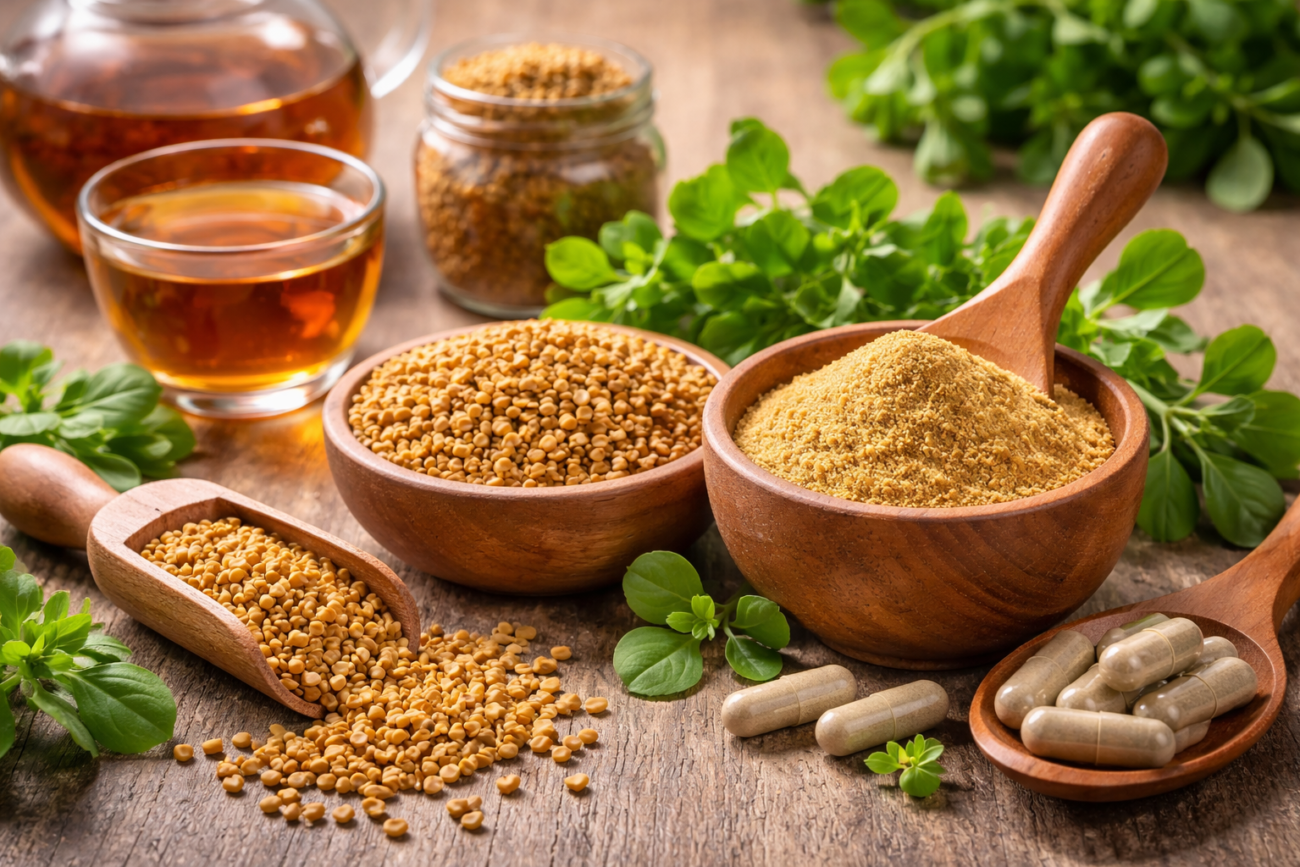
Foenegriek is the Dutch spelling many people use for fenugreek, a plant known for its seeds, leaves, and long history in both cooking and traditional wellness. Some people first come across it in spice blends, while others see it in tea, powders, or capsules. Because it appears in both food and supplement spaces, there is often confusion about what it really does and how it should be used.
What Foenegriek Is
Foenegriek comes from the plant Trigonella foenum-graecum. The seeds are the best-known part, but the leaves are also used in some cuisines. The plant has a long history across parts of Asia, the Middle East, and the Mediterranean region, which explains why it appears in both kitchen traditions and herbal practices.
In daily use, foenegriek shows up in several forms. You may find whole seeds, ground powder, tea blends, capsules, and liquid extracts. That wide range of forms is one reason the topic can feel confusing. A person searching for a cooking ingredient may be looking for something very different from a person looking at a supplement label. Good content should explain both without mixing them together in a misleading way.
What Foenegriek Tastes Like And How People Use It In Food
The taste of foenegriek is strong and distinctive. It is often described as warm, earthy, slightly bitter, and lightly nutty. Some people also notice a sweet note in the background. The flavor can become more rounded when the seeds are toasted gently, which is why many cooks prefer to warm them before grinding or adding them to a dish.
In cooking, foenegriek is usually not used in very large amounts. A little can change the flavor of a curry, stew, lentil dish, spice blend, or flatbread. That is important for beginners, because too much can easily overpower a meal. The safest way to start is with a small amount, taste the result, and then adjust next time.
Tea is another simple way people try foenegriek. Some enjoy the mild herbal taste, while others blend it with other ingredients to soften the bitterness. From a reader’s point of view, practical use matters. People do not just want abstract health talk. They want to know how the ingredient fits into ordinary life, what it tastes like, and how to avoid wasting it on a bad first attempt.
Nutritional Profile And Natural Compounds
Foenegriek contains fiber and a range of plant compounds that are often discussed in nutrition and herbal content. These include saponins and soluble fiber components, which are some of the reasons researchers have looked at the plant in relation to digestion, blood sugar, and cholesterol. At the same time, it is important to keep serving size in mind. An ingredient can contain useful compounds without becoming a magic solution in normal everyday amounts.
This is where many weak articles go wrong. They list nutrients and then jump straight to exaggerated promises. A more trustworthy approach is to say that foenegriek has an interesting nutritional profile, but real-life effects depend on the amount used, the form taken, the person’s diet, and their overall health. That kind of explanation feels more honest and is usually more helpful for readers trying to make practical decisions.
Possible Benefits Of Foenegriek
Foenegriek is often discussed for digestion, appetite, blood sugar balance, and cholesterol support. These are the areas that appear most often in health-focused content, and they are also the topics that readers usually expect to see in a complete guide. Some studies and reviews have looked at fenugreek in relation to these concerns, especially blood sugar management, but that does not mean every product or every claim is equally reliable.
Another commonly mentioned topic is breastfeeding support. Fenugreek has long been used traditionally for milk supply, which is why many readers search for it in that context. However, major health sources note that the evidence is mixed and that safety in amounts greater than food use is not fully clear. That means this topic should be handled carefully and without sweeping promises.
The strongest way to write about benefits is to stay balanced. Foenegriek may be useful in some situations, especially as part of a broader diet or wellness routine, but it should not be presented as a cure-all. Readers trust content more when it explains both interest and limits instead of trying to sell a miracle.
Different Forms Of Foenegriek And How To Choose The Right One
Whole seeds are a good choice for cooking. They store well, can be toasted, and give the user control over texture and strength. Powder is easier for quick cooking and blending into recipes, but it loses freshness faster if stored badly. Tea works for people who want a lighter, more traditional style of use. Capsules and extracts are usually chosen by people looking for convenience or a more measured daily serving.
The best form depends on the goal. For flavor, cooking with seeds or powder usually makes the most sense. For someone interested in supplement-style use, labels matter much more. Strength, serving size, and extra ingredients can vary a lot between products. That is one reason supplement articles should always tell readers to read the label carefully instead of assuming all products are equal. According to NCCIH, dietary supplements are not approved by the FDA before sale in the same way as drugs, and manufacturers are responsible for product safety and labeling.
A simple rule works well here: choose food forms when your goal is culinary use, and choose supplements only when you have a clear reason and understand the product. That keeps the topic practical and helps readers avoid confusion.
Safety, Side Effects, And Who Should Be Careful
Foenegriek is generally considered safe in the amounts commonly found in food, but higher amounts used in supplements can lead to side effects or cautions. Reported side effects include digestive upset such as gas, bloating, diarrhea, or stomach discomfort. People with sensitivities may notice these effects more quickly, especially if they start with a high dose.
Allergy is another important issue. People with allergies related to chickpeas, peanuts, or other legumes may need to be extra careful, because cross-reactivity can happen. That is a practical detail many readers need, especially if they are trying an herbal product for the first time.
Pregnancy deserves special caution. NCCIH states that fenugreek is not safe during pregnancy in amounts greater than those found in food, and it has been linked to pregnancy-related risks. Breastfeeding is also an area where people often hear strong claims, but the evidence on milk supply is mixed, and safety in larger-than-food amounts is not fully established. Anyone who is pregnant, breastfeeding, managing a health condition, or taking medication should speak with a qualified healthcare professional before using fenugreek as a supplement.
Practical Ways To Use Foenegriek In Daily Life
The easiest way to start with foenegriek is through food. Add a small pinch of powder to a savory dish, or lightly toast a few seeds before mixing them into a spice blend. This helps readers experience the flavor before deciding whether they want to explore it more deeply. Starting with food also feels more natural than jumping straight into concentrated supplements.
Another good approach is to think about the reason for use. If the goal is flavor, stay in the kitchen. If the goal is wellness support, do more homework first. Read the label, avoid taking too much too soon, and watch how your body responds. That is a more realistic strategy than copying a dosage idea from a random source online.
Many people also benefit from keeping expectations simple. Foenegriek can be a useful ingredient and an interesting traditional herb, but the smartest way to use it is gradually and with context. A balanced article should guide the reader toward sensible use, not impulsive use.
Conclusion
Foenegriek is one of those ingredients that sits between food tradition and modern wellness interest. It has a distinctive taste, several practical forms, and a long history of use. That makes it worth understanding properly, especially because many readers first encounter it through broad claims that do not explain the full picture.
The best way to think about foenegriek is as a versatile plant with real culinary value and some promising health interest, but not as a miracle product. It may support certain goals for some people, especially when used thoughtfully, yet safety, dosage, and personal context still matter. That balance is what makes content on this topic genuinely helpful.
FAQ’s:
What Is Foenegriek?
Foenegriek is the Dutch name for fenugreek, a plant whose seeds and leaves are used in cooking and traditional herbal use.
What Does Foenegriek Taste Like?
It has a warm, earthy, slightly bitter, and mildly nutty taste.
How Is Foenegriek Usually Used?
It is commonly used as whole seeds, powder, tea, or in supplement form such as capsules.
Is Foenegriek Safe To Use Every Day?
It is generally safe in normal food amounts, but supplement use should be more careful, especially for people with health conditions.
Can Foenegriek Cause Side Effects?
Yes, some people may experience bloating, stomach discomfort, or other mild digestive side effects.
Looking for more? Explore other articles on our site.
Disclaimer:
This article is for general informational and educational purposes only. It is not medical advice, diagnosis, or treatment. Foenegriek may affect people differently, especially if you are pregnant, breastfeeding, taking medication, or managing a health condition. For personal guidance, it is best to speak with a qualified doctor or healthcare professional before using it regularly as a supplement.
